Yemen blockade: UN warns of 'untold thousands' of deaths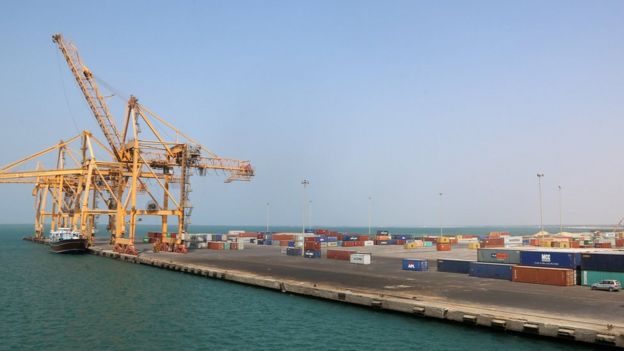
Three United Nations agencies have issued an urgent appeal for the Saudi-led coalition fighting in Yemen to fully lift its blockade of the country.
The World Health Programme, World Food Programme and Unicef said the reopening of government-controlled air and sea ports this week was not sufficient.
The closure of rebel-held ports was "making an already catastrophic situation far worse", they added.
Without fresh supplies, the agencies warned, "untold thousands" would die.
The coalition, which is supporting the Yemeni government in its war with the rebel Houthi movement, tightened its two-year blockade of Yemen's borders on 6 November in response to a ballistic missile attack on the Saudi capital Riyadh.
Saudi Crown Prince Mohammed bin Salman accused its regional rival Iran of supplying the missile but Iranian President Hassan Rouhani denied arming the Houthis and said the attack was a "reaction" by Yemenis to coalition air strikes.
- Yemen's civilians pay price of blockade
- Witnessing Yemen's desperate suffering
- Yemen conflict: Who is fighting whom?
On Monday, Saudi diplomats announced that the restrictions would be lifted partially, with air and sea ports in areas under government control reopening.
Aid deliveries to the rebel-held ports of Hudaydah and Saleef would resume once the UN had addressed the coalition's concerns about weapons smuggling, they said.
So far, 29 vessels with 300,000 tonnes of food and 192,000 tonnes of fuel had been prevented from reaching Yemen, and a UN ship transporting 1,300 tonnes of health, WASH (water, sanitation and hygiene) and nutrition supplies had been unable to dock at Hudaydah, they added.
On Thursday, the directors of the WHO, WFP and Unicef issued a joint statement urging the coalition to immediately permit the delivery of life-saving supplies, warning, "Without them, untold thousands of innocent victims, among them many children, will die."
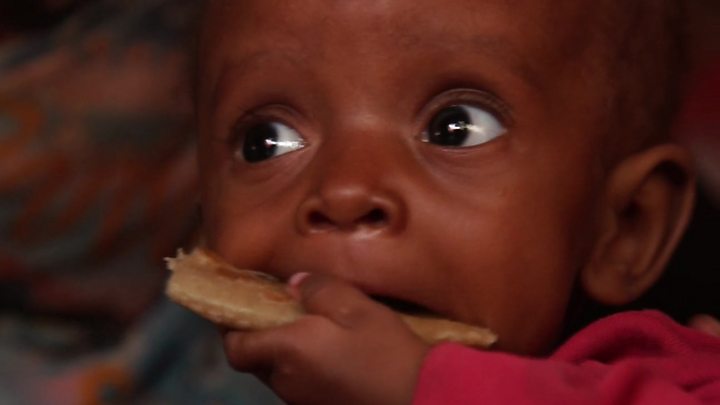
According to the UN agencies:
- More than 20 million people, including more than 11 million children, are in need of urgent humanitarian assistance
- At least 14.8 million are without basic healthcare and an outbreak of cholera has resulted in more than 900,000 suspected cases
- Some 17 million do not know where their next meal is coming from and seven million are totally dependent on food assistance
- Severe acute malnutrition is threatening the lives of almost 400,000 children
- As supplies run low, food prices rise dramatically, putting thousands more at risk
Even with a partial lifting of the blockade, the WFP estimates, an additional 3.2 million will be pushed into hunger and if left untreated, 150,000 children could die within the coming months.
"To deprive this many from the basic means of survival is an unconscionable act and a violation of humanitarian principles and law," the agency directors warned.
Diphtheria is also spreading fast, with 120 clinically diagnosed cases and 14 deaths - mostly children - in the last weeks. With vaccines and medicine blocked from entry, at least one million children are now at risk of contracting the disease.
More than 8,670 people - 60% of them civilians - have also been killed and 49,960 injured in fighting on the ground and air strikes since the coalition intervened in the war in March 2015, according to the UN.
Comments